
What Is Corporate Video Production?

A polished video on your homepage might look impressive. That alone does not make it effective. If it does not clarify your offer, build trust, and move the right audience toward action, it is just expensive motion.
So, what is corporate video production? At its best, it is the process of planning, filming, and editing video content for a business with a clear commercial purpose. That purpose might be brand awareness, lead generation, internal communication, recruitment, investor confidence, product education, or sales support. The key point is simple: corporate video production is not just about making a company look good. It is about making video work harder for the business.
What Is Corporate Video Production in Practical Terms?
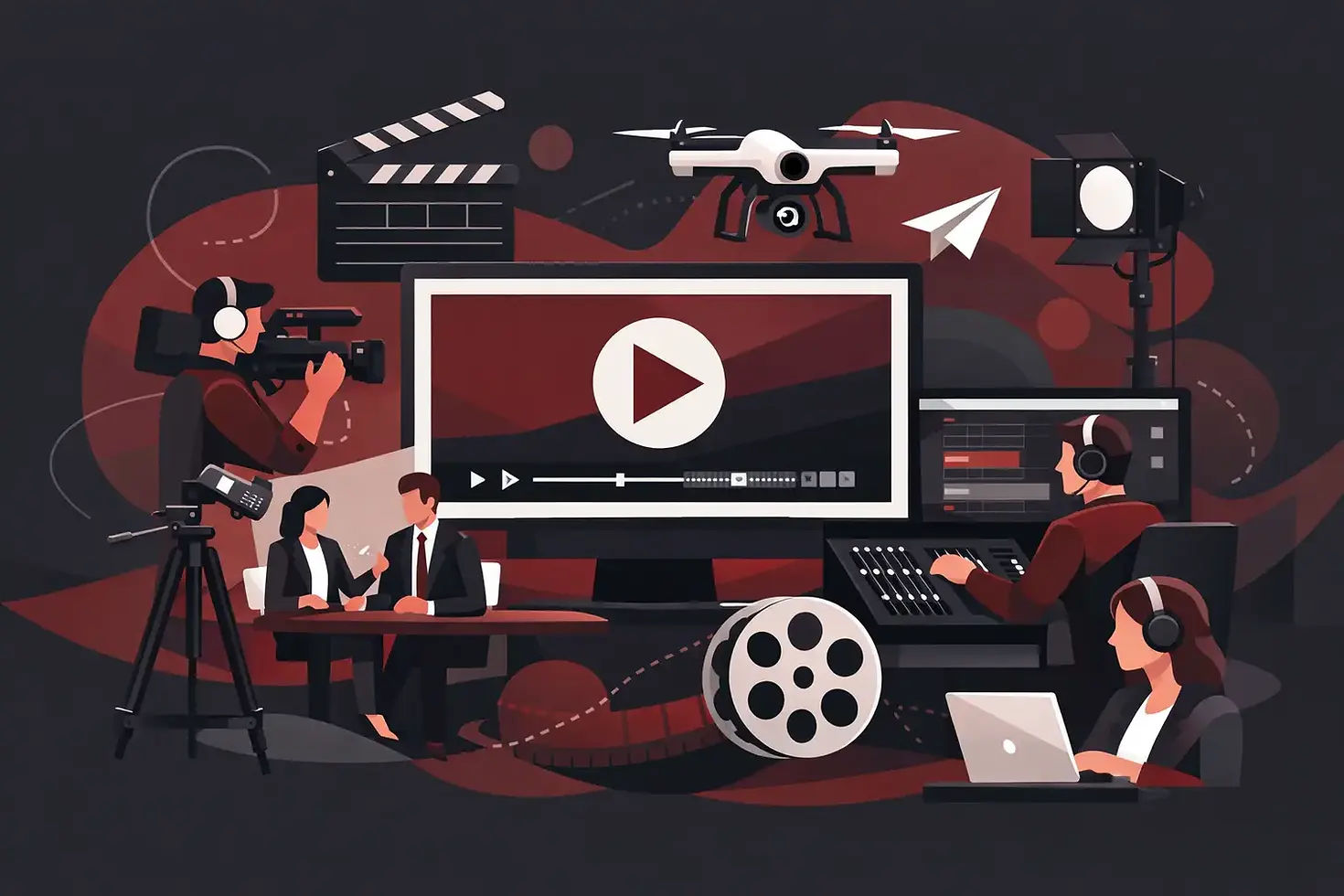
Corporate video production covers any professionally produced video created for business use. That includes company profile videos, brand films, recruitment videos, training content, product explainers, executive interviews, event coverage, case studies, social ads, and internal communications.
The format can vary, but the job stays the same. A corporate video should help a business communicate something clearly and persuasively to a specific audience. Sometimes that audience is external, like prospects, customers, or investors. Sometimes it is internal, like staff, partners, or stakeholders.
This is where many businesses get the definition wrong. They assume corporate means dry, formal, or old-fashioned. It does not. Corporate video production can be cinematic, sharp, fast-paced, and creative. The difference is that the creative choices are tied to a business goal, not just style for style’s sake.
Why Businesses Invest in Corporate Video Production
Most decision-makers are not asking for video because they need another asset sitting in a folder. They want something that supports growth. A strong corporate video can explain a complex service faster than a sales deck, give credibility to a new brand, improve conversion rates on landing pages, or help a team communicate consistently at scale.
Video is often the shortest path between interest and understanding. If your business sells something nuanced, technical, high-value, or trust-dependent, that matters. A written page can do a lot. A well-produced video can show expertise, personality, process, and proof in a way that feels immediate.
That said, not every company needs the same kind of video. A startup trying to get attention may need short-form brand and social content. A larger company might need recruitment campaigns, internal messaging, or customer success stories. A service business may get more value from testimonial-led content than from a glossy overview film. It depends on the audience, the sales cycle, and where video fits in the broader marketing funnel.
The Main Types of Corporate Video Production
Corporate video production is a broad category, which is why strategy matters early. A company overview video is designed to introduce the business, explain its value, and build trust. That can work well on websites, presentations, and outreach.
Recruitment videos are focused on culture, team credibility, and attracting the right candidates. These are especially useful when hiring is competitive and brand perception affects applicant quality.
Training and internal communication videos help businesses deliver consistent information without repeating the same message in every meeting. They save time, improve clarity, and create a more scalable way to onboard or update teams.
Case study videos and testimonials are often the strongest commercial performers because they provide proof. Instead of the brand talking about itself, real customers explain the value in practical terms.
Then there are product demos, launch videos, event films, social promos, and executive-led thought leadership pieces. Each one has a different job. The mistake is treating them all as if they serve the same purpose.
What the Corporate Video Production Process Usually Looks Like
Good results start long before the camera shows up. Pre-production is where the strategy is built. This stage covers audience targeting, messaging, concept development, scripting, shot planning, logistics, and distribution thinking. If a video is weak here, no amount of editing will fix the underlying problem.
Production is the filming stage. This includes directing, lighting, audio, camera operation, and managing interviews or on-screen talent. The goal is not just to capture attractive footage. It is to capture the right footage for the message, platform, and intended outcome.
Post-production is where the story is shaped. Editing, color grading, sound design, motion graphics, music, captions, and versioning all happen here. This is also where strategic teams think beyond one master video. A single shoot can often be turned into multiple assets for websites, paid ads, social media, email campaigns, and internal channels.
That matters because return on investment rarely comes from one video alone. It comes from building a smart set of assets from one production effort.
What Makes Corporate Video Effective
A corporate video works when it combines clear messaging, professional execution, and a realistic distribution plan. Miss one of those, and performance usually drops.
Messaging comes first. If the script sounds vague, generic, or self-congratulatory, viewers tune out. The strongest videos are built around audience needs. They answer practical questions, remove doubt, and make the next step feel obvious.
Execution matters because poor visuals and weak audio can damage credibility fast. People may not know the technical reason a video feels cheap, but they notice the effect. If your brand wants to be trusted, the production quality has to support that.
Distribution is where many businesses fall short. They commission a video, post it once, and expect results. That is not a strategy. Video performs better when it is created with placement in mind from the start. A homepage video, a LinkedIn cutdown, a paid social ad, and a sales follow-up clip should not all be identical. Different platforms need different lengths, hooks, framing, and calls to action.
What Corporate Video Production Is Not
It is not simply filming a few interviews and stitching them together. It is not a branding exercise with no business objective attached. And it is definitely not about creating something cinematic just because it looks expensive.
There is nothing wrong with high production value. In fact, strong visuals can raise perceived quality and improve trust. But aesthetics alone do not create results. If the message is unclear or the audience targeting is off, the video will underperform no matter how good it looks.
That is why performance-driven production matters. Creative should support strategy. The best work does both.
How to Know If Your Business Needs Corporate Video Production
If your team keeps repeating the same pitch, if prospects do not fully understand your offer, if your brand lacks credibility online, or if your campaigns need stronger creative, video is worth serious consideration.
It is especially valuable when your product or service depends on trust. Service businesses, B2B firms, healthcare providers, manufacturers, hospitality brands, education groups, and corporate teams all benefit from showing real people, real process, and real proof.
Still, there are trade-offs. Not every company needs a large-scale production right away. In some cases, a targeted testimonial series or a short campaign asset will outperform a broad company film. Budget, timeline, audience behavior, and business goals should shape the scope.
A smart production partner will not push a one-size-fits-all package. They should help you decide what kind of video is most likely to move the needle and where it will actually be used.
Choosing the Right Corporate Video Production Partner
The right partner should understand more than cameras and editing software. They should understand how video fits into marketing, sales, and brand growth. That means asking sharper questions at the start. Who is this for? What action should they take? Where will they see it? How will success be measured?
If a production company only talks about visuals, gear, and style references, that is only part of the picture. A stronger partner will connect creative choices to outcomes. They will think about attention span, message structure, platform behavior, and how to turn one production into multiple useful assets.
That is the difference between getting a video and getting a business tool.
For brands that want creative that looks strong and sells even better, that distinction matters. Agencies like Wild A Productions build around that idea from day one: strategy first, production with purpose, and content designed to earn attention and drive action.
Corporate video production is not a nice extra when used properly. It is one of the clearest ways to show what your business does, why it matters, and why people should trust you. If your message deserves more than another block of copy, video might be the move that finally gives it traction.


Comments